


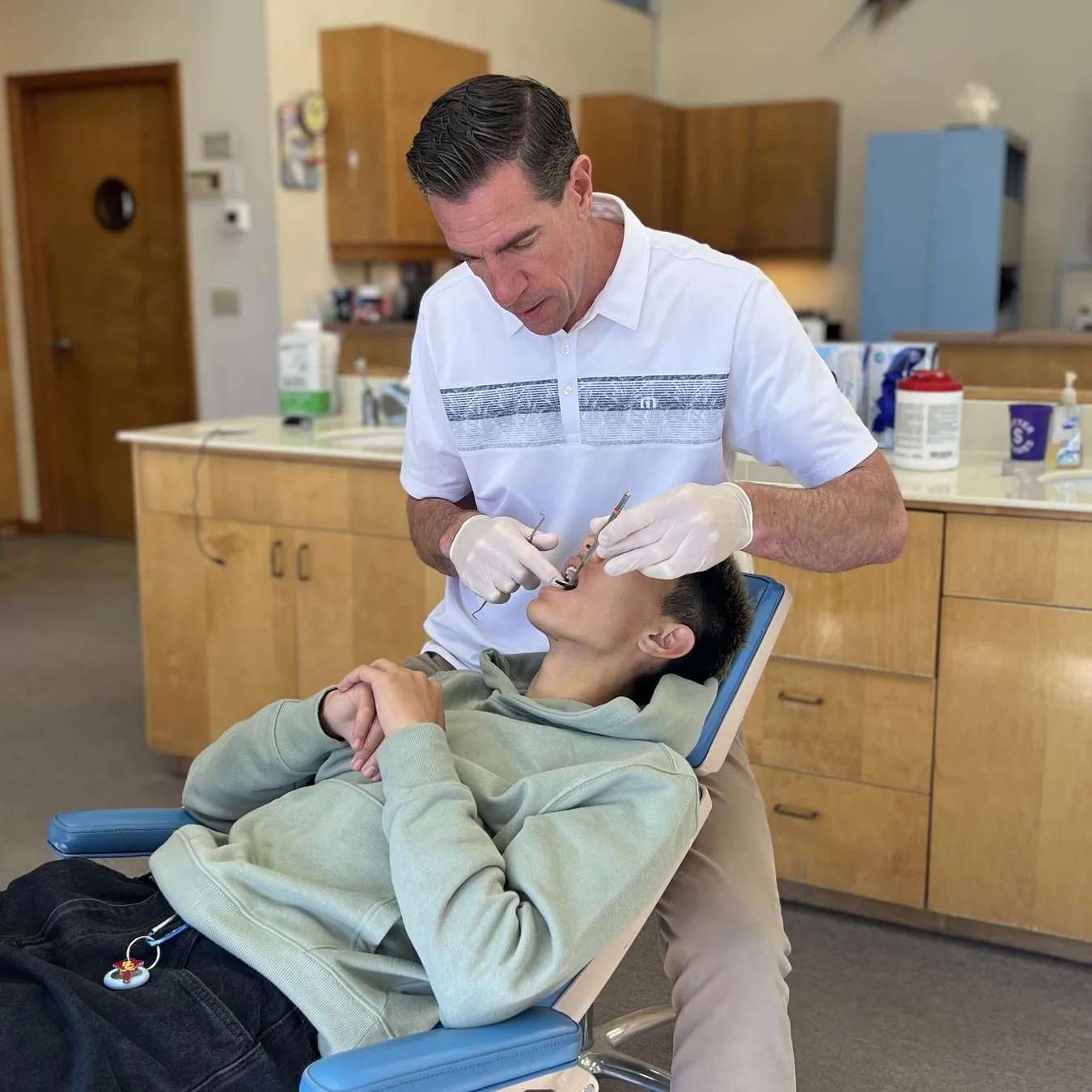
Yes, most dental insurance plans cover braces, typically paying 25-50% of treatment cost up to a lifetime orthodontic maximum. Coverage usually applies to both traditional braces and Invisalign under the same orthodontic benefit. Our team, led by Dr. Potter, an ADA member and certified Invisalign provider, verifies your benefits before treatment begins so there are no surprises.
Knowing your benefits ahead of time makes budgeting for braces much easier. Every plan reads a little differently, so the details matter. Here’s what you should know:
- Lifetime orthodontic maximum: A separate cap from your annual dental maximum, used once per person
- Coverage percentage: Most plans reimburse a portion of the total fee, not the full amount
- Medical insurance: Rarely covers braces unless treatment is medically necessary (such as cleft palate or severe jaw issues)
- Treatment type: Braces and Invisalign usually qualify under the same orthodontic benefit
Our team handles the insurance paperwork for you, so you’ll know your exact out-of-pocket cost before you commit. That’s part of the smile experience we want every patient to have, start to finish.
How Orthodontic Insurance Benefits Work
Orthodontic insurance works differently than standard dental coverage. Instead of resetting each year, orthodontic benefits use a lifetime maximum that applies once per person. Most insurers pay in installments across your treatment timeline, not in one lump sum, and many plans require waiting periods or age limits before benefits kick in.
Here’s how the pieces fit together:
- Lifetime maximum: A set dollar amount (often $1,000-$3,000, per industry norms) the plan will pay toward braces over your lifetime
- Coverage percentage: Your plan reimburses a set percentage of the total fee, commonly 25-50%
- Installment payments: Insurers usually send payments quarterly or in stages as treatment progresses
- Waiting periods: Some plans require 6-12 months of active coverage before orthodontic benefits start
- Age limits: Certain plans only cover dependents under 18 or 19
- Pre-authorization: Submitting a pre-treatment estimate confirms your exact reimbursement before you begin
Our team submits the pre-authorization for you and walks you through every line. You’ll see what your plan pays, what you owe, and how monthly payments fit your budget. No guesswork, and no surprise bills waiting for you down the road.
What Orthodontic Insurance Typically Covers
Most orthodontic riders cover a long list of treatment services, not just the braces themselves. Knowing what’s included helps you get the most from your benefits.
Common services covered under an orthodontic benefit include:
- Braces: Traditional metal and ceramic braces are almost always covered
- Clear aligners: Invisalign and similar systems usually qualify under the same benefit
- Diagnostic records: Initial X-rays, photos, and impressions are often included
- Free consult: Some plans cover the first visit, though we offer free consults regardless
- Retainers: Many plans pay a portion of post-treatment retainers
- Phase 1 treatment: Early treatment for kids may be covered on select plans
Coverage varies by plan, so two patients with the same insurer can have very different benefits. That’s why we verify each policy individually before quoting your cost. Whether you choose braces or Invisalign, we’ll show you exactly what your plan contributes toward your perfect smile.
Insurance Coverage: Braces vs. Invisalign vs. No Coverage
One of the most common questions we hear is whether insurance treats braces and Invisalign the same. In most cases, yes, but there are exceptions worth checking before you decide.
A few things to keep in mind:
- Older policies: Some plans written years ago exclude clear aligners, so always check the language
- FSA and HSA funds: Both account types can pay for braces or Invisalign tax-free
- No insurance options: Our $0 down and monthly payment options keep treatment accessible for every life stage
- Verifying first: We confirm your benefits in writing before you ever commit to a plan
The right choice depends on your benefits, lifestyle, and treatment goals. We’ll help you compare what you’ll actually pay for each option side by side, with nothing buried in the fine print.
What Affects Your Out-of-Pocket Braces Cost
Your final cost comes down to four main factors: your lifetime orthodontic maximum (usually $1,000-$3,000), your coverage percentage (typically 25-50%), whether your provider is in-network, and the complexity of your treatment. Together, these shape what you’ll actually pay after insurance applies its share.
Key factors that affect what you’ll actually pay:
- Lifetime orthodontic maximum: Most plans cap coverage at $1,000-$3,000 per person
- Coverage percentage: Plans typically reimburse 25-50% of the total fee
- In-network vs. out-of-network: Network providers often have negotiated rates that lower your share
- Treatment complexity: Mild crowding costs less than full bite correction
- Treatment length: Longer cases usually mean higher overall fees
- Payment tools: FSA, HSA, and monthly payment options reduce the remaining balance
We make the numbers easy to follow. After verifying your benefits, we give you a clear breakdown of what insurance pays and what’s left on your end. From there, we build a monthly payment that works for your budget, often with $0 down. Many of the families we treat start sooner than they expected once they see the real figures.
Will Your Plan Cover Your Treatment?
Before scheduling treatment, take a few minutes to confirm your coverage details. A quick call to your insurer (or a quicker call to us) clears up the most important questions.
Here’s what to verify:
- Orthodontic rider: Confirm your dental plan actually includes an orthodontic benefit, not all do
- Age limits: Check whether your plan covers adults or only dependents under 18
- Waiting period: Ask if any waiting period has been satisfied
- Pre-treatment estimate: Request a written estimate of your exact coverage amount
- Retreatment cases: Find out whether relapse or second-round treatment qualifies
If you’re not sure where to start, that’s exactly what we’re here for. Our team calls your insurer, gathers the details, and translates the fine print into plain English. You’ll walk into your free consult already knowing what’s covered, ready to plan your next step with confidence.
Ready to Find Out What Your Plan Covers?
Led by Dr. Potter, our team has helped families make sense of their orthodontic benefits for years. As an ADA member and certified Invisalign provider, our practice welcomes new patients of every life stage and treats each visit as part of an unforgettable smile experience.
Bring your insurance card to your free consult and we’ll verify your benefits, walk you through your options, and show you exactly what treatment will cost before you decide anything. We believe orthodontics is for everyone, and confirming your coverage is the first easy step. Reach out anytime to get the conversation started and discover the difference our team makes.
Frequently Asked Questions About Braces Insurance
Does insurance cover braces for adults?
Some plans cover adult braces, but many limit orthodontic benefits to dependents under 18 or 19. Check your plan’s age limit before assuming coverage applies. If your plan doesn’t cover adult treatment, FSA and HSA funds plus our monthly payment options keep adult orthodontics affordable.
What is a lifetime orthodontic maximum?
This is the total dollar amount your insurance will pay toward braces or Invisalign across your lifetime, not per year. Most plans set this between $1,000 and $3,000 per person. Once you use it, the benefit doesn’t reset, even if you switch jobs or insurance carriers.
Can I use FSA or HSA for braces?
Absolutely. Both Flexible Spending Accounts (FSA) and Health Savings Accounts (HSA) cover braces and Invisalign as qualified medical expenses. You can use pre-tax dollars to pay your share of treatment, which lowers the real cost. Many patients combine insurance benefits with FSA/HSA funds for the biggest savings.
Does insurance cover Invisalign the same as braces?
In most cases, yes. Modern dental plans treat Invisalign and traditional braces equally under the orthodontic benefit. A few older policies still exclude clear aligners, so always check your plan language. We verify this for you before recommending a treatment.
Do you offer payment plans if insurance won’t cover it?
We do. Our $0 down and monthly payment options fit your budget, so even without insurance, treatment stays within reach. Our team will walk you through every number so you know what to expect before you start.
How do I find out my orthodontic benefits?
The easiest way is to let us handle it. Bring your insurance card to your free consult, and our team will call your insurer, verify your orthodontic benefits, and provide a written breakdown of your coverage. You can also call the member services number on your card and ask about your orthodontic rider, lifetime maximum, and coverage percentage.